Color is the decision homeowners spend the most time on when planning a Denver garage floor, and it's also the one with a real functional consequence beyond looks: some colors hide Colorado's road salt and mag chloride residue far better than others. This guide covers the most popular color choices for Denver garages, why darker tones perform better here specifically, and how to match a color system to your home's exterior — the same conversation we have with every homeowner considering an epoxy garage floor in Denver.
Most Popular Garage Floor Colors in Denver
Across the projects ProEpoxy has installed around the metro, a handful of color families come up again and again — each for a slightly different reason, from practicality to matching a specific home style.
Why Darker Colors Hide Road Salt Better
This isn't just a preference — it's a practical consequence of what actually lands on a Denver garage floor every winter. Magnesium chloride deicer and road salt track in on tires and boots throughout the snow season, leaving a chalky white residue that dries visibly against light-colored flooring. On a light solid color, that residue shows almost immediately after each snow event. On a darker flake blend, the same residue blends into the color variation of the flake pattern itself and is far less noticeable between cleanings.
This is a genuinely Denver-specific consideration — homeowners moving from climates without heavy winter deicer use often don't think about it until their first Colorado winter, at which point a light floor that looked great in the showroom starts showing every trip in from a snowy driveway. It's a common enough regret that we now bring it up proactively with anyone leaning toward a light solid color during their free assessment, rather than letting them find out the hard way after the first snowstorm.
Practical tip: If you love a lighter color aesthetically, a multi-tone flake blend (rather than a true solid) still gives you a lighter overall look while the color variation in the flake pattern camouflages salt residue far better than a flat single-tone floor.
Solid vs Flake vs Metallic Color Systems
Beyond the color itself, the system used to apply it changes both the look and the practical performance — this is as much a decision as the color choice itself.
| System | Look | Salt/Stain Hiding |
|---|---|---|
| Solid ColorSingle flat tone | Clean, minimalist | Lower — shows marks fastest |
| Full-Broadcast FlakeMulti-color chip blend | Textured, dimensional | Best — pattern camouflages residue |
| Metallic / 3D SwirlPearlescent, marbled effect | Premium, showroom-grade | Good — variegated finish hides most marks |
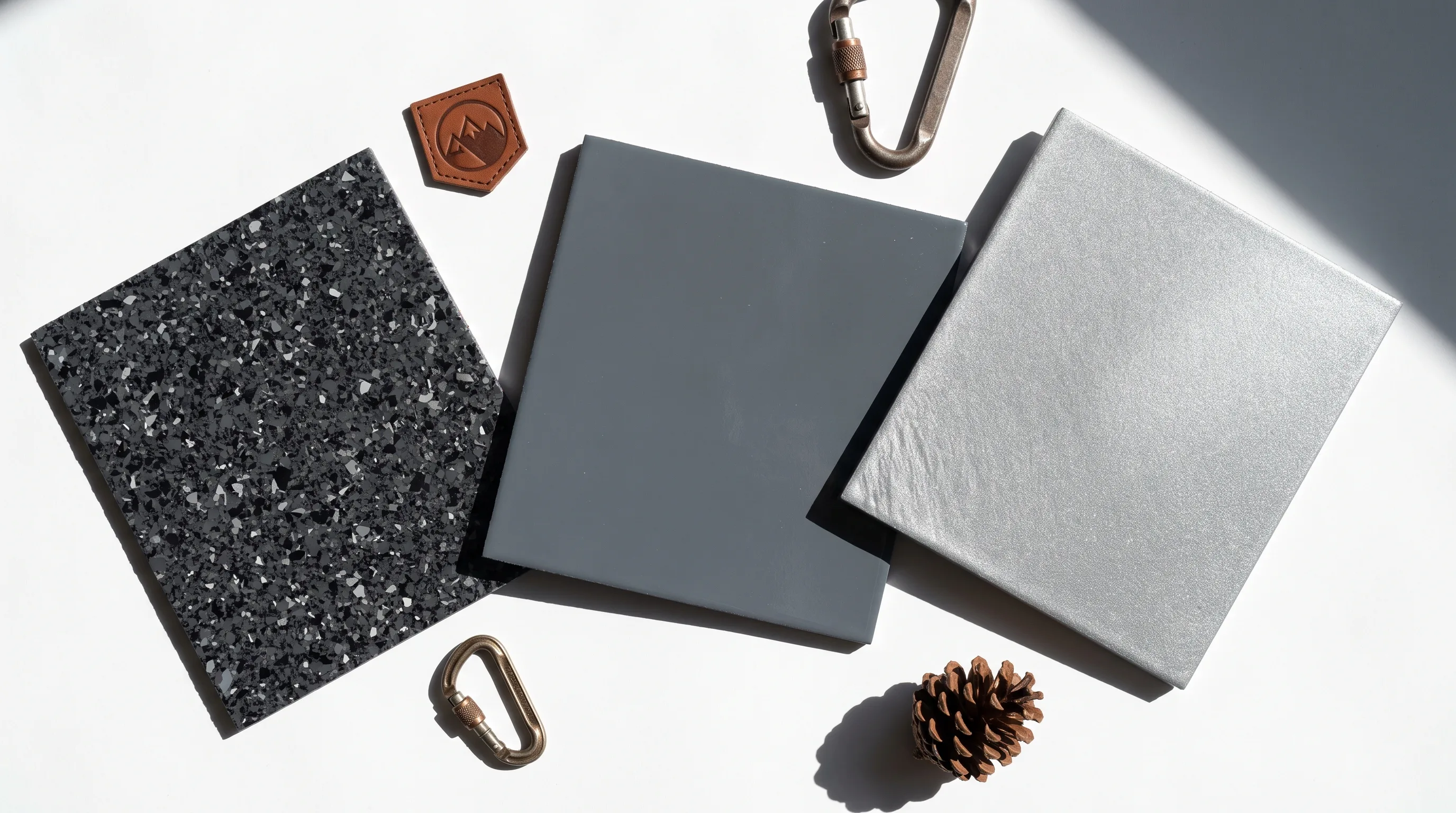
Physical color samples like these are brought to every ProEpoxy free assessment so you can see the finish in your own garage lighting.
Matching Color to Your Home's Exterior
A garage floor is one of the few interior finishes that's regularly visible from the street with the door open, so it's worth thinking about alongside your home's exterior palette rather than in isolation.
- Modern / contemporary homes: Cool-toned charcoal or slate gray flake blends complement clean architectural lines and neutral exterior palettes.
- Craftsman and traditional homes: Warmer gray-brown flake blends read as more grounded and complement wood and stone exterior accents.
- Newer builds with modern trim: Metallic silver or pewter systems match the premium finish level often used in newer Denver-metro construction.
- Homes with visible garages from the street: A darker, more uniform flake blend reads as more polished from a distance than a high-contrast light-and-dark mix.
There's no wrong answer here functionally — every system ProEpoxy installs gets the same diamond-ground prep and UV-stable polyaspartic topcoat regardless of color. The color decision is really about what you want to look at every time you pull into the garage, which is worth spending the extra few minutes on.
Keeping Your Color Looking New Through Denver Winters
Whatever color you choose, the finish that actually protects it matters more than the color pigment itself. Every ProEpoxy system uses an aliphatic polyaspartic topcoat over the color layer — that's what keeps the color from fading or yellowing under Denver's high-altitude UV exposure, which runs roughly 25% stronger than at sea level. A color chosen for a standard epoxy topcoat without UV stabilization will visibly shift and dull within a single Colorado summer, regardless of how good it looked on day one.
Beyond the topcoat itself, a few habits keep any color looking sharp through the winter salt season specifically:
- Rinse or sweep weekly during snow season. Mag chloride residue is easiest to remove before it dries into a chalky film — a quick sweep or hose-off after a few snow trips prevents buildup.
- Use a pH-neutral cleaner for deeper cleans. Harsh degreasers or acidic cleaners can dull the topcoat's gloss over time; a neutral cleaner keeps the finish and color both looking correct.
- Use floor mats or a boot tray near the entry door. Concentrating salt and moisture tracking in one washable spot reduces how much residue spreads across the full floor.
None of this is unique to a particular color — it's true of any coated garage floor in Colorado's climate — but it matters more visibly on lighter colors where residue shows fastest, which is part of why the color and the maintenance conversation are really the same conversation.
2026 Color Trends in Denver Garages
Color preferences shift gradually, and a few patterns have become clear across recent installs. Cooler gray tones have continued to edge out the warmer beige and tan flake blends that were more common several years ago, tracking a broader shift toward the cooler, more neutral palettes common in newer Denver-metro construction and renovation. Metallic systems have also grown in popularity beyond car-enthusiast garages specifically — more homeowners are treating the garage as a genuine extension of the home's finished space rather than purely utilitarian storage, which pushes demand toward the more premium-looking metallic and multi-tone flake systems.
That said, trend-chasing is a smaller factor in this decision than most homeowners expect. Because the floor is installed once and reasonably expected to last 15-20 years with a proper polyaspartic topcoat, a color chosen for how it looks against your specific home rather than what's currently popular tends to age better than one chosen purely for trend appeal.