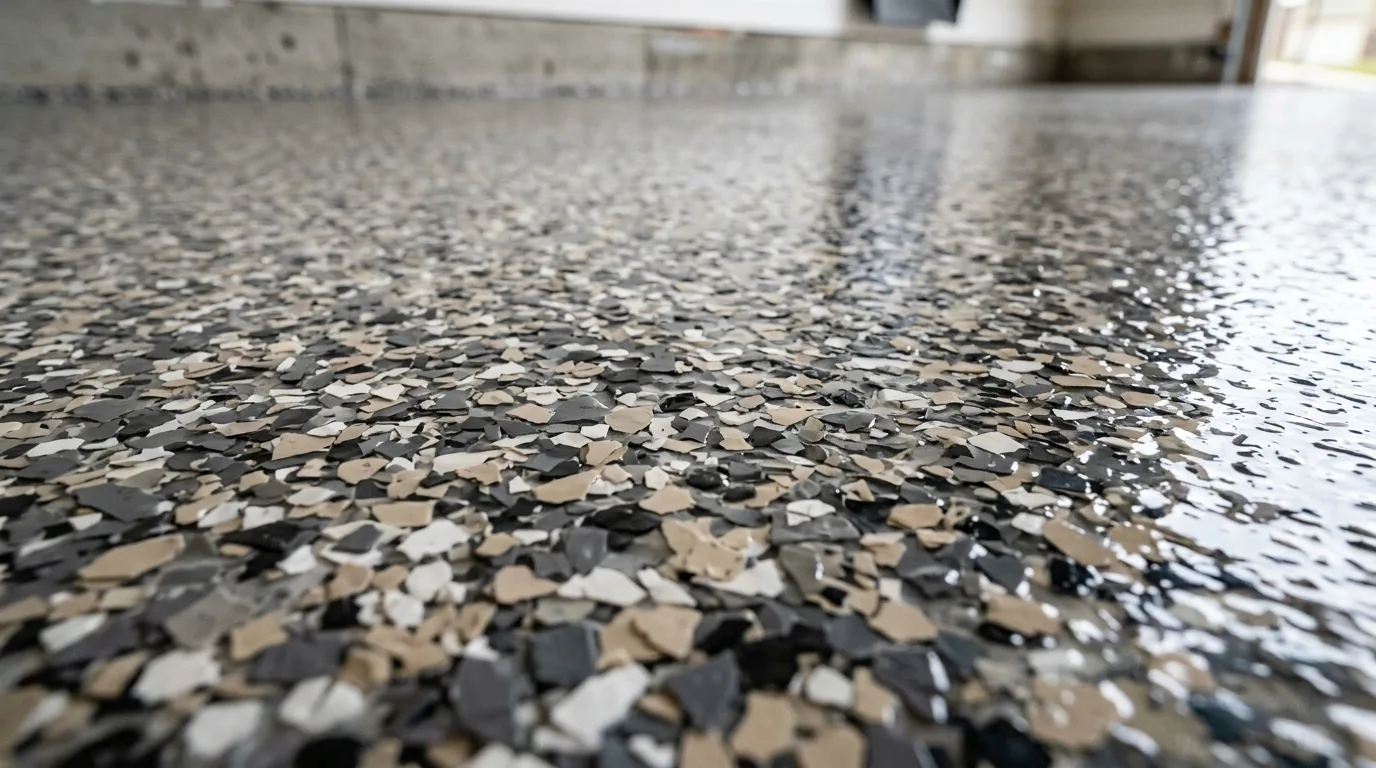
Epoxy flake flooring is Denver's most-requested garage finish for a reason: it hides everything a garage floor gets dirty with — tire marks, oil drips, dropped tools — while delivering a durable, freeze-thaw rated surface that outperforms plain solid-color epoxy in almost every practical measure. Understanding how broadcast density, color blend, and topcoat selection interact helps you get the right floor the first time. Visit our epoxy flake flooring service page for system options and pricing.
Full Broadcast vs Partial Flake Systems
The single biggest decision in a flake floor is broadcast density — how much of the wet epoxy base gets covered in chips before the topcoat goes down. This single choice determines look, durability, and price more than any other spec.
Full Broadcast
Chips thrown to complete refusal — no epoxy base visible. Maximum durability, maximum dirt-hiding, most popular for Denver garages and showrooms.
Partial / Accent Broadcast
Lighter chip coverage, epoxy base color visible through gaps. Lower cost, decorative accent look — common in basements and light-use areas.
Topcoat Thickness
Two coats of clear polyaspartic seal the chip layer for both broadcast types — thickness affects wear resistance more than chip density does.
Base Coat Color
Full broadcast: base color is invisible, pick any economical shade. Partial broadcast: base color is a visible design element — choose deliberately.
Most Popular Flake Color Blends in Denver
Chip color blends fall into a few reliable categories that consistently perform well in Denver homes and commercial spaces. Granite-style blends — mixing charcoal, tan, and white chips — dominate residential requests because they hide dirt equally well in both light and dark garages.
- Storm Grey Blend: Charcoal, slate, and light grey chips — the most requested residential blend in Denver, works with any garage door and exterior color.
- Desert Tan Blend: Beige, tan, and brown chips — complements Denver's stucco and adobe-style home exteriors.
- Black & White: High-contrast salt-and-pepper look — popular in showrooms and modern commercial spaces.
- Custom Brand Blends: Businesses can specify chip colors matching brand palette for retail and showroom floors.
Slip Resistance and Freeze-Thaw Durability
The textured surface created by chip broadcast naturally improves slip resistance over a smooth solid-color epoxy — an underrated benefit for Denver garages that see snow-melt tracked in from vehicles all winter. For areas needing additional traction, we can broadcast a fine anti-slip aggregate into the final clear coat without affecting the visual color blend.
The polyaspartic topcoat used to seal every flake system is rated for Colorado's freeze-thaw cycling and resistant to deicing salt and magnesium chloride. Because the chip layer is fully encapsulated beneath the topcoat, moisture never reaches the chips or base epoxy — eliminating the delamination risk that affects unsealed or improperly cured systems.
Cost of Flake Epoxy vs Metallic Epoxy in Denver
Flake systems sit in the middle of Denver's epoxy pricing spectrum — more durable and dirt-hiding than solid color, less labor-intensive than metallic epoxy's multi-layer technique.
| System | Look | Price Range |
|---|---|---|
| Solid Color Epoxy | Uniform, flat color | $3–$5 / sq ft |
| Partial Broadcast Flake | Accent chips over visible base | $4–$5 / sq ft |
| Full Broadcast Flake | Complete granite-style coverage | $4–$6 / sq ft |
| Metallic Epoxy | Fluid, 3D marbled effect | $6–$9 / sq ft |
For most Denver homeowners, full-broadcast flake delivers the best value: near-metallic visual upgrade over solid color, at a price point closer to standard epoxy. Free on-site quotes include chip sample review so you can see actual blends under your garage lighting before committing.
Frequently Asked Questions
Chips are thrown into wet epoxy until fully covered, then sealed with clear polyaspartic. The most durable and most popular system in Denver garages — the chip layer hides tire marks, dirt, and minor surface imperfections between cleanings.
Yes — the polyaspartic topcoat is rated for Colorado's freeze-thaw cycling and deicer chemical contact. The flake layer itself is fully encapsulated in the topcoat, so no moisture or salt exposure reaches the chips or base epoxy.
Yes — we stock dozens of blends and can create custom mixes for brand or design requirements. Denver homeowners and businesses can preview physical chip samples on-site before committing to a blend.