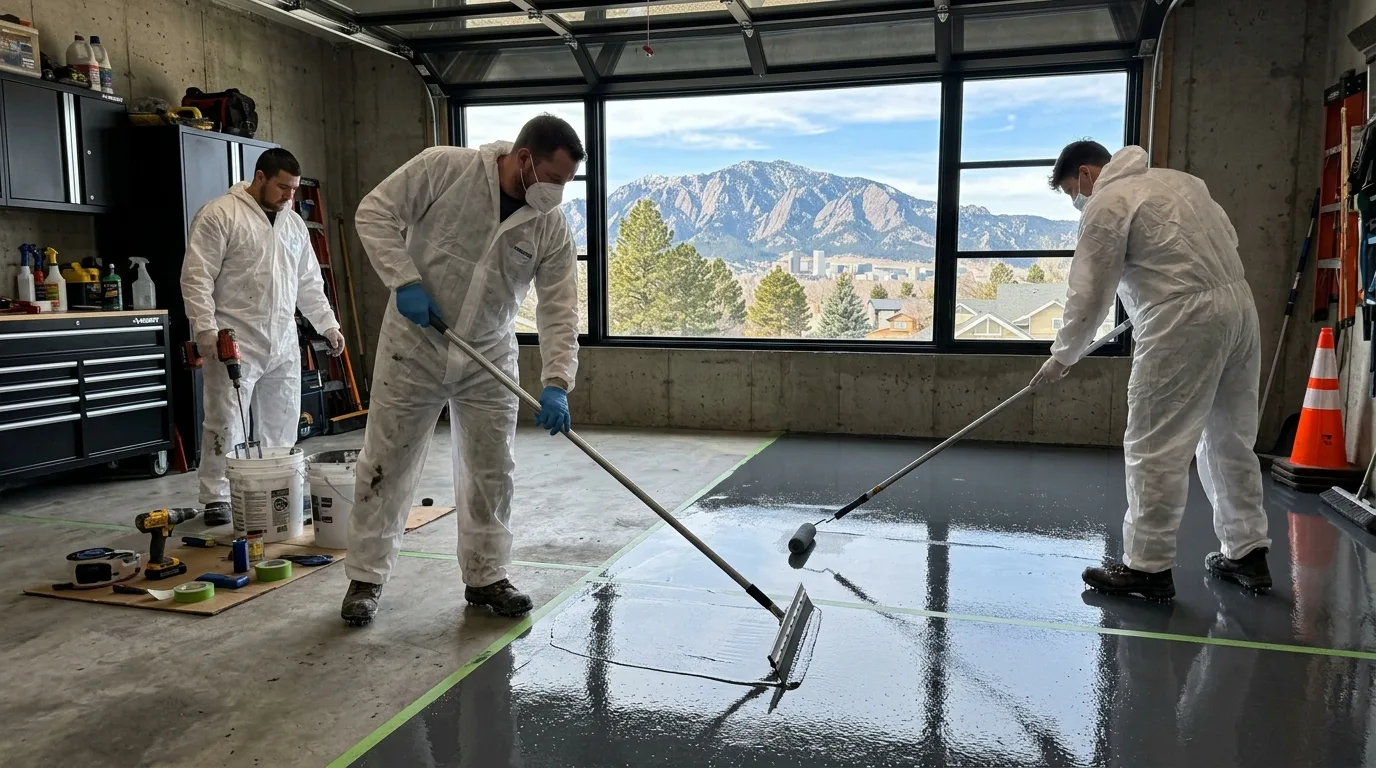
Epoxy flooring quotes in Denver can vary by thousands of dollars for what looks like the same job on paper — and the difference almost always comes down to crew quality and surface prep, not material cost. This checklist walks through exactly what to ask before you sign a contract. See our About Us page for how ProEpoxy structures every project.
In-House Crew vs Subcontractors: Why It Matters in Denver
Many "epoxy companies" in the Denver market are actually marketing and sales operations that subcontract the physical installation to third-party crews — sometimes different crews on different jobs. This matters because quality control, warranty accountability, and crew experience with Colorado-specific conditions (altitude, freeze-thaw, prep requirements) can vary wildly between subcontractors.
In-House Crews
Same team quotes, preps, and installs every job. Consistent quality, direct accountability, and a warranty that isn't diluted across multiple subcontracted parties.
Written Warranty
A legitimate contractor puts warranty terms in writing — labor and material coverage clearly separated, with defined timeframes.
Prep Method Disclosure
A contractor should specify diamond grinding vs acid etching in the written quote — not leave it vague or unstated.
Colorado Experience
Ask how many local jobs they've completed and whether they specify polyaspartic topcoats standard — a sign of genuine altitude and freeze-thaw expertise.
5 Questions to Ask Before Hiring Any Denver Epoxy Contractor
- "Do you use in-house crews or subcontractors?" If subcontracted, ask who holds the warranty and how quality is verified.
- "What's your surface prep method — diamond grinding or acid etching?" Diamond grinding is the correct answer for a lasting bond; acid etching is a red flag for budget-cut corners.
- "Is polyaspartic topcoat standard or an upcharge?" Given Denver's UV and freeze-thaw conditions, it should be standard, not optional.
- "What's your written warranty, specifically?" Get labor and material coverage terms in writing, not just verbal assurance.
- "Can I see photos or references from recent local jobs?" A contractor with real Denver-area experience should have this readily available.
Red Flags When Getting Quotes in Colorado
- Vague or unspecified prep method: If the quote doesn't mention grinding, ask directly — silence usually means acid etch or no real prep at all.
- Dramatically lower price than competitors: Usually means skipped prep steps, fewer coats, or thinner mil thickness than a proper system requires.
- No mention of polyaspartic or UV-stable topcoat: Standard epoxy alone will yellow at Denver's altitude — any contractor not addressing this isn't accounting for local conditions.
- Pressure to sign same-day: A legitimate contractor doesn't need high-pressure tactics to close a straightforward home improvement project.
- No physical address or local references: Out-of-state franchise operations sometimes lack genuine local accountability.
Why Local Denver Contractors Know Altitude and Freeze-Thaw
Colorado's climate isn't generic — 5,280 ft altitude means roughly 25% more UV intensity than sea level, and the Front Range sees 150+ freeze-thaw cycles annually. A contractor who's installed hundreds of floors specifically in this climate understands why polyaspartic topcoats are non-negotiable, why prep matters more here than in milder climates, and how to sequence installs around Colorado's seasonal weather windows. National franchise scripts and out-of-market crews often miss these specifics.
Frequently Asked Questions
Ask directly — and ask who holds the warranty if a sub's work fails. ProEpoxy uses in-house crews on every job, so the same team that quotes the project performs the installation and stands behind the warranty.
1-year minimum on labor; 3–5 years on material defects for polyaspartic systems with proper prep. Be wary of any contractor offering no written warranty or one under a year.
No — diamond grind vs acid etch prep accounts for 80% of system longevity. Cheap quotes skip proper prep every time, which means a floor that looks fine at installation but fails within 2–3 years.