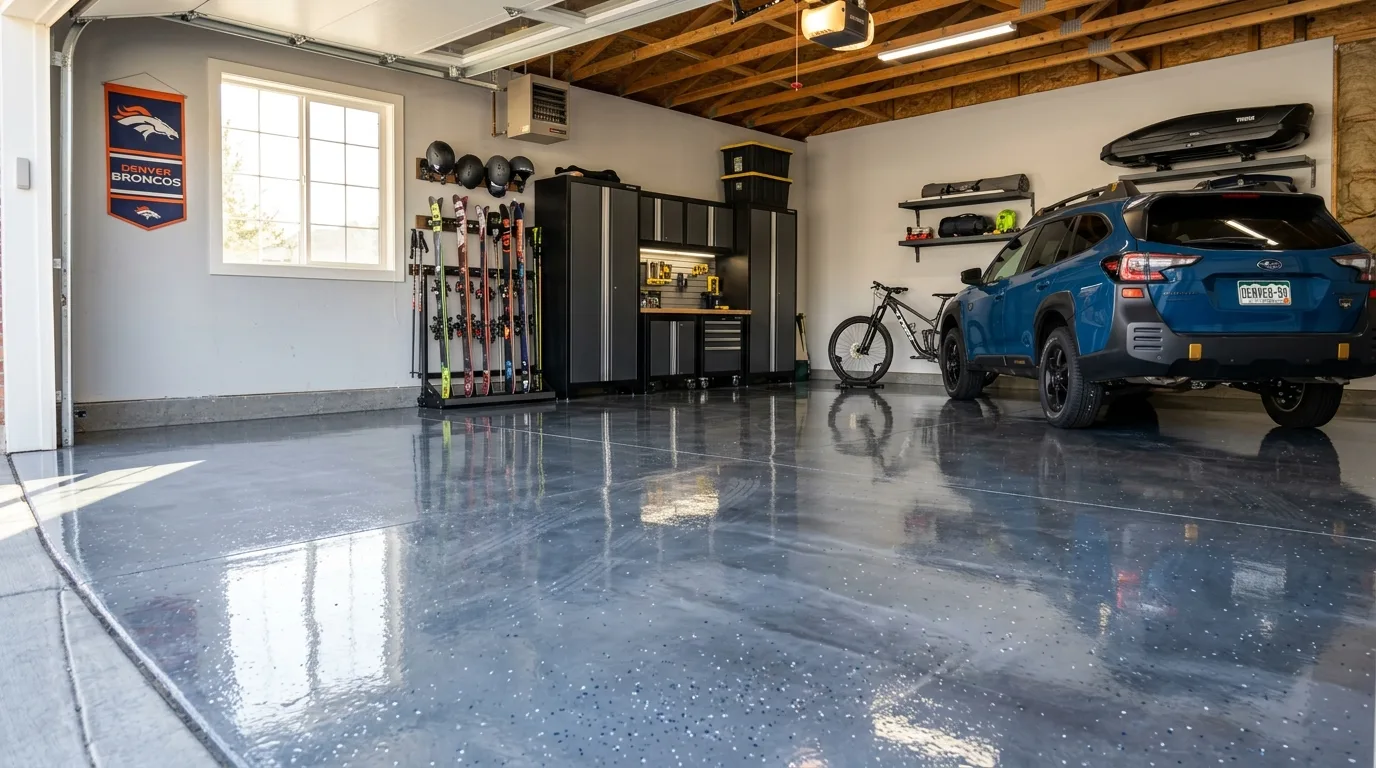
"How long will this last?" is the question every Denver homeowner should ask before signing an epoxy contract — and the honest answer depends heavily on system type and installation quality, not just the brand of epoxy used. Here's what actually determines lifespan in Colorado's specific climate. See our Polyaspartic Floor Coating and Garage Floor Epoxy pages for system details.
Epoxy Lifespan by System Type in Denver
Not all epoxy systems are built the same, and lifespan varies significantly by system architecture — particularly whether a UV-stable polyaspartic topcoat is included.
| System | Typical Lifespan | Primary Failure Mode |
|---|---|---|
| DIY / Acid-Etch Prep Epoxy | 1–3 years | Delamination from poor bond |
| Standard Epoxy, Diamond-Ground Prep | 10–15 years | UV yellowing, gradual wear |
| Epoxy + Polyaspartic Topcoat | 15–20 years | Minor surface wear only |
| Full-Broadcast Flake + Polyaspartic | 15–20+ years | Rare — most durable residential system |
How Colorado's UV and Altitude Shorten (or Extend) Epoxy Life
Denver's 5,280 ft elevation exposes floors to roughly 25% more UV intensity than sea level. This is the single biggest lifespan variable most homeowners don't anticipate. Standard aromatic epoxy resin yellows and gradually loses surface integrity under this UV load — a garage with south-facing windows or a frequently open door will show degradation faster than a fully enclosed space.
UV Exposure
South-facing windows and open garage doors accelerate degradation on standard epoxy. Polyaspartic topcoat eliminates this variable entirely.
Temperature Swings
Colorado's large daily temperature swings (30°F+ common) stress coating flexibility — polyaspartic's chemistry handles this better than rigid standard epoxy.
Salt Exposure
Deicing salt and magnesium chloride tracked in over winter degrade unprotected surfaces faster — polyaspartic resists chemical breakdown significantly better.
Installation Quality
Diamond-ground prep vs acid etching is the largest single lifespan factor — outweighing coating brand or even system type in most failure analyses.
How Freeze-Thaw Cycles Affect Epoxy Longevity
Denver's 150+ annual freeze-thaw cycles primarily threaten the concrete substrate beneath the coating, not the coating itself — moisture that migrates into an inadequately sealed or improperly bonded floor can freeze, expand, and cause delamination from underneath. A properly diamond-ground and fully cured epoxy system creates a moisture-resistant seal that largely insulates the coating from this substrate-level freeze-thaw stress.
Maintenance That Extends Epoxy Life in Colorado
- Sweep or dust mop weekly: Removes grit that can scratch the topcoat over years of foot and tire traffic.
- Damp mop monthly: Removes accumulated salt residue and road grime before it can concentrate on the surface.
- Avoid harsh chemical cleaners: Stick to pH-neutral cleaners — acidic or highly alkaline products can dull the topcoat over time.
- Address chips or scratches promptly: Small topcoat damage can be spot-repaired before it exposes the base coat to UV and moisture.
- Reapply topcoat at 10–15 years if needed: A worn topcoat over an intact base coat can often be recoated rather than fully replaced — extending total system life significantly.
Frequently Asked Questions
10–15 years for standard epoxy, 15–20 years for polyaspartic topcoat systems with basic maintenance. Proper diamond-ground surface prep is the single biggest factor in reaching the upper end of these ranges.
Standard epoxy yes — it yellows and degrades faster at altitude. UV-stable polyaspartic topcoat neutralizes this risk, which is why it's specified as standard on every ProEpoxy install rather than an optional upgrade.
Recoat when topcoat wears thin but base coat is intact. Replace when base coat delaminates or slab repairs are needed. A qualified assessment can determine which category your floor falls into before committing to either approach.