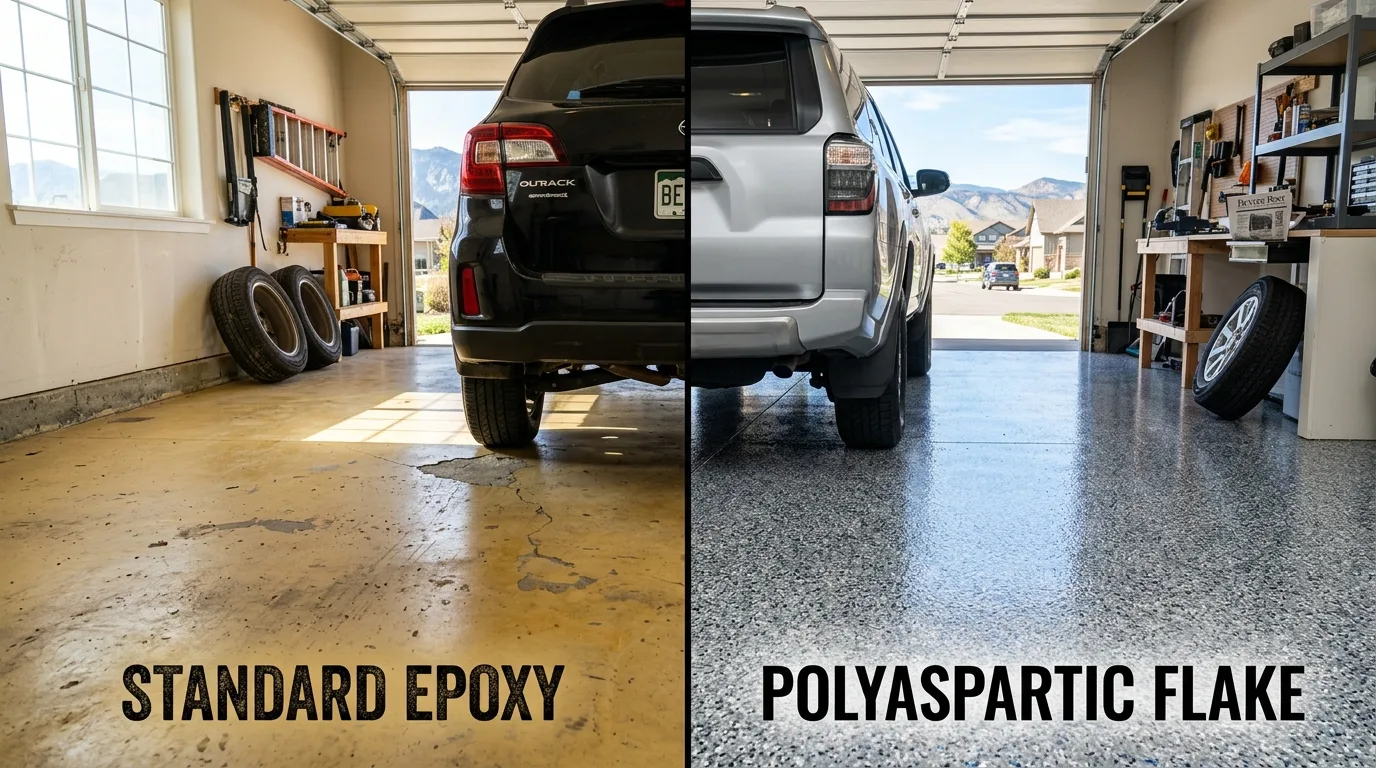
"Epoxy" and "polyaspartic" get used almost interchangeably by homeowners, but they're different chemistries solving different problems — and in Denver's climate, the difference actually matters. This is the honest comparison, not a sales pitch: where standard epoxy is genuinely fine, and where it will let you down at 5,280 feet. For deeper background on either system, see our Epoxy vs Polyaspartic Denver resource page.
Cure Time: Epoxy Takes Days, Polyaspartic Takes Hours
Standard epoxy needs 24 hours before light foot traffic and up to 3–5 days before full vehicle weight — a real consideration if you're coordinating around a family's only garage. Polyaspartic cures dramatically faster: light traffic in as little as 4–6 hours, full cure within 24 hours, largely independent of humidity swings that can slow epoxy cure. See our polyaspartic floor coating service page for system details.
Epoxy Cure Timeline
24 hrs to foot traffic, 3–5 days to full vehicle load. Humidity and temperature swings can extend this window further.
Polyaspartic Cure Timeline
4–6 hrs to foot traffic, full cure within 24 hrs. Chemistry is largely temperature and humidity independent.
UV Resistance
Standard epoxy yellows under sustained UV exposure. Polyaspartic (specifically aliphatic formulations) resists yellowing indefinitely.
Freeze-Thaw Rating
Polyaspartic is formulated for repeated freeze-thaw cycling and deicer chemical contact — standard epoxy alone is not.
UV Stability at Denver's 5,280 ft Altitude
This is where the comparison actually gets decided for most Denver homeowners. UV intensity at Denver's altitude runs roughly 25% higher than at sea level — meaning any garage with a window, skylight, or south-facing exposure through an open door sees meaningfully more UV exposure than an equivalent garage in a lower-elevation city.
Standard aromatic epoxy resins are not UV-stable — they will yellow, chalk, or dull over months to a few years of sun exposure. Aliphatic polyaspartic resins are chemically engineered to resist this degradation. Practically, this means: epoxy base coat, polyaspartic topcoat is the correct system architecture for essentially every Denver residential or commercial install with any sun exposure.
Freeze-Thaw Resistance: Which Holds Up in Colorado Winters?
Denver sees 150+ annual freeze-thaw cycles, and garage floors take the brunt of it — snowmelt, road salt, and magnesium chloride track in on every vehicle all winter. Polyaspartic topcoats resist these deicing chemicals significantly better than uncoated epoxy, and their flexibility better accommodates the microscopic expansion and contraction that occurs as moisture in the concrete freezes and thaws beneath the coating.
| Property | Standard Epoxy | Polyaspartic |
|---|---|---|
| Cure time to full use | 3–5 days | 24 hours |
| UV stability | Yellows over time | UV-stable, no yellowing |
| Freeze-thaw rating | Limited | Fully rated |
| Deicer/salt resistance | Moderate | High |
| Application temperature range | Narrower | Wider — works in cooler temps |
| Cost | Lower | Moderately higher |
Cost Difference in Denver: Epoxy vs Polyaspartic
Standard epoxy alone runs slightly cheaper than a polyaspartic-topped system, but the gap is smaller than most homeowners expect — typically $0.50–$1.50 per square foot. Given that polyaspartic largely eliminates the yellowing and freeze-thaw failure modes that cause premature recoating, most Denver installs (including everything ProEpoxy does) use epoxy base coat with polyaspartic topcoat as the standard system, not an optional upgrade.
Frequently Asked Questions
Yes — intense UV at 5,280 ft yellows non-UV-stable epoxy. Aliphatic polyaspartic topcoat is mandatory for Colorado garages that receive direct sunlight through windows or open doors.
Yes — rated for repeated freeze-thaw cycling, making it the correct topcoat for Colorado's climate extremes. It also resists deicing salt and magnesium chloride better than standard epoxy alone.
Yes — UV stability and freeze-thaw resistance make polyaspartic the right choice for virtually every Denver garage. The added cost is modest compared to the extended service life and reduced risk of premature yellowing or peeling.