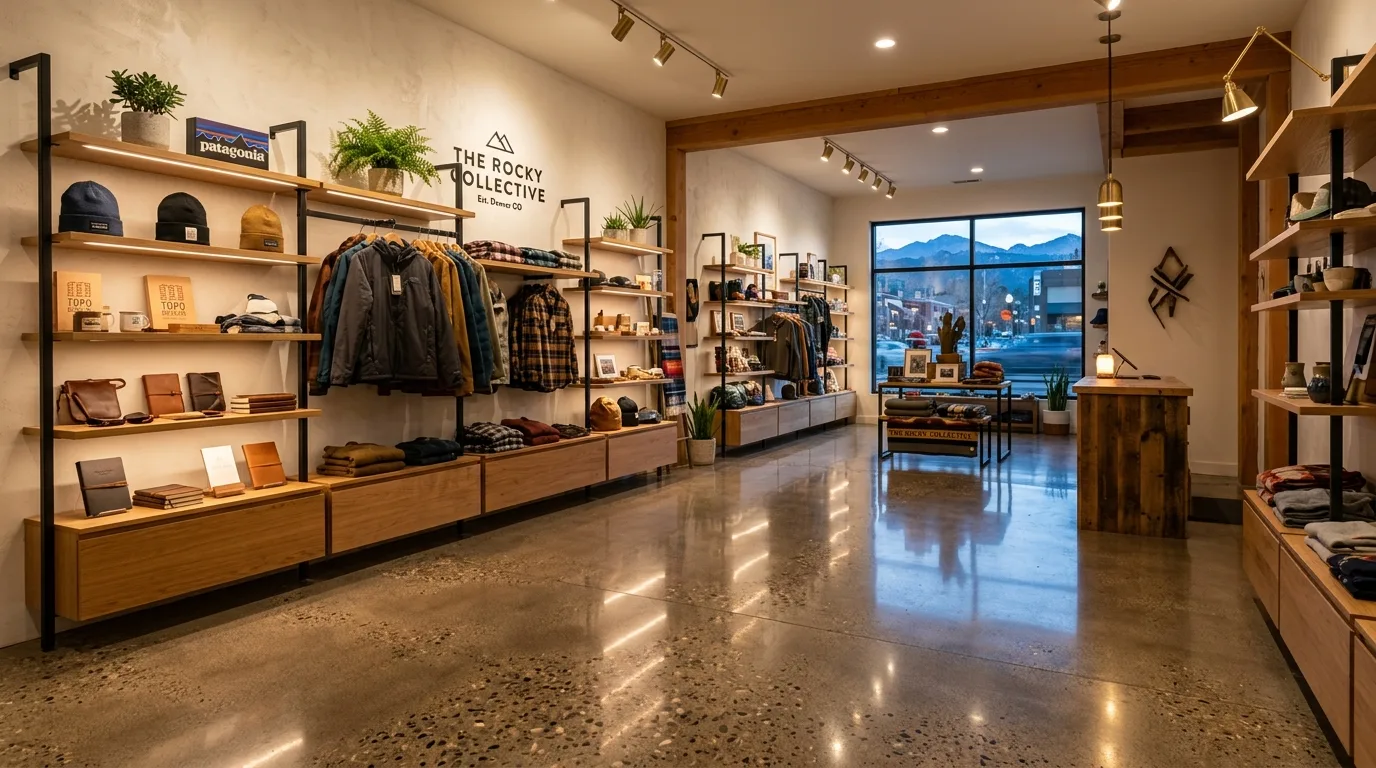
Polished concrete is the one floor finish that gets better as it ages. Diamond-ground, densified, and burnished to a surface harder than the original slab, polished concrete in Denver benefits from something rare: an ideal climate. Low humidity reduces moisture vapor emission, tightens pore sealing, and produces a reflectivity level that struggles to form in humid coastal markets. If your slab is in reasonable condition, polishing delivers a durable, low-maintenance floor that looks sharp in homes, retail, and commercial spaces alike. Visit our polished concrete floors service page for finish options and pricing.
Finish Levels Explained: 100 to 3000 Grit
Polished concrete finish is measured in grit — the coarseness of the final diamond tool pass. Lower grit = matte, higher grit = mirror. Most residential and retail jobs fall in the 800–1500 range. True mirror polish (3000 grit) is typically reserved for showrooms and high-end retail.
| Grit Level | Sheen | Best For |
|---|---|---|
| 100–400 | Flat / Matte | Warehouses, industrial, low-traffic areas |
| 400–800 | Satin | Offices, back-of-house, residential utility |
| 800–1500 | Semi-gloss | Retail, restaurants, residential living areas |
| 1500–3000 | High-gloss / Mirror | Showrooms, luxury retail, lobbies |
Each grit level requires multiple passes — a floor finished to 1500 grit typically goes through 6–8 tool changes from initial grinding through final burnish. Densifier (lithium silicate) is applied mid-process to harden the surface and reduce dust generation, which is especially relevant in Denver's already-dry air.
Aggregate Exposure Options for Denver Slabs
How much stone and aggregate shows through depends on how aggressively the surface is ground at the start. Denver's Front Range slabs typically contain river rock aggregate — when exposed, it creates a terrazzo-like appearance that many designers specify by name.
Cream Polish
No aggregate removed. Surface stays smooth with minor surface marks. Fastest and least expensive — minimal material removal.
Salt & Pepper
Light grind reveals fine aggregate and minor pinholes. Most popular residential and retail finish in Denver — balanced look, moderate cost.
Medium Aggregate
Deeper grind exposes 1/4–3/8" stone. River rock aggregate visible throughout. Works well with Denver's natural palette.
Full Aggregate
Maximum grind exposes full stone profile. Terrazzo-like appearance. Requires high-quality aggregate in the original mix — confirm with core sample before specifying.
Best Applications for Polished Concrete in Denver
Polished concrete isn't the right choice for every space — but where it fits, nothing competes on longevity or maintenance cost. Denver's commercial and retail markets have embraced it for the same reason hospitality markets in Europe have for decades: it's genuinely easy to maintain at scale.
- Retail stores: High foot traffic with mop-and-go maintenance. Reflectivity improves lighting efficiency — relevant in Denver's energy-cost environment.
- Restaurant dining rooms: Seamless, food-safe, acoustically neutral with proper seating arrangements.
- Residential open-plan living: Salt & pepper finish pairs with mountain-modern and industrial design aesthetics common in Denver's LoDo and RiNo neighborhoods.
- Home basements and gyms: Moisture vapor performance is better than epoxy in some moisture-challenged slabs — hardened surface doesn't delaminate the way coatings can.
- Office lobbies: Low-maintenance, durable, and impressive under ambient lighting.
Polished Concrete vs Epoxy for Denver Retail
The most common question from Denver commercial clients: should I polish or coat? Both are good answers — the right choice depends on the slab condition, intended use, and aesthetic goal.
| Factor | Polished Concrete | Epoxy Coating |
|---|---|---|
| Lifespan | 20+ years (mechanical) | 5–15 years (chemical bond) |
| Maintenance | Damp mop + periodic burnish | Damp mop, no burnish needed |
| Damage repair | Re-polish affected area | Spot recoat or full system |
| Hot tire resistance | Not applicable (no coating) | Needs polyaspartic topcoat |
| Color options | Natural aggregate palette | Unlimited solid + flake colors |
| Upfront cost | $3–$8 / sq ft | $3–$9 / sq ft |
| Best for | Retail, restaurant, lobby | Garage, warehouse, industrial |
For Denver retail and restaurant clients on Colfax, Broadway, or in RiNo, polished concrete is often the better long-term investment — no coating means no delamination risk, and the surface can be restored with a burnish rather than a full recoat when it eventually dulls.
Frequently Asked Questions
20+ years with basic maintenance. Denver's low humidity is actually ideal for polished concrete longevity — less moisture vapor means tighter pore sealing and less risk of surface degradation over time.
Positively — low humidity reduces moisture vapor risk, allowing tighter pore sealing and better reflectivity. Denver's dry air also shortens cure times between grinding passes, which can speed the overall polishing process.
Thermally similar to tile — it conducts and radiates ambient room temperature. Pair with radiant heating under the slab for comfortable winter living areas. Polished concrete is an excellent heat sink for radiant systems, distributing warmth evenly across the floor.