Polyurea vs Polyaspartic: The Real Difference
Polyurea and polyaspartic are related chemistries that are frequently confused — polyaspartic is actually a subclass of aliphatic polyurea. The distinction that matters for floor coating selection:
- Polyurea (pure) — extremely fast reaction chemistry, applied with plural-component spray equipment, gel times measured in seconds to minutes. Used for thick-film industrial applications, secondary containment, truck bed liners, and extreme-service environments. Not practical as a thin decorative floor coating because of the application speed and equipment required.
- Polyaspartic (aliphatic polyurea) — modified chemistry with a longer pot life, applied with standard roller equipment, gel times measured in minutes to hours. Used as topcoats over epoxy base coats for garages, commercial, and decorative applications.
When flooring contractors use "polyurea" to describe a garage floor system, they typically mean polyaspartic — which is fine and correct. When industrial facilities specify "polyurea," they usually mean the plural-component spray-applied thick-film system that this guide covers. Both are excellent coatings for different applications in Denver's climate.
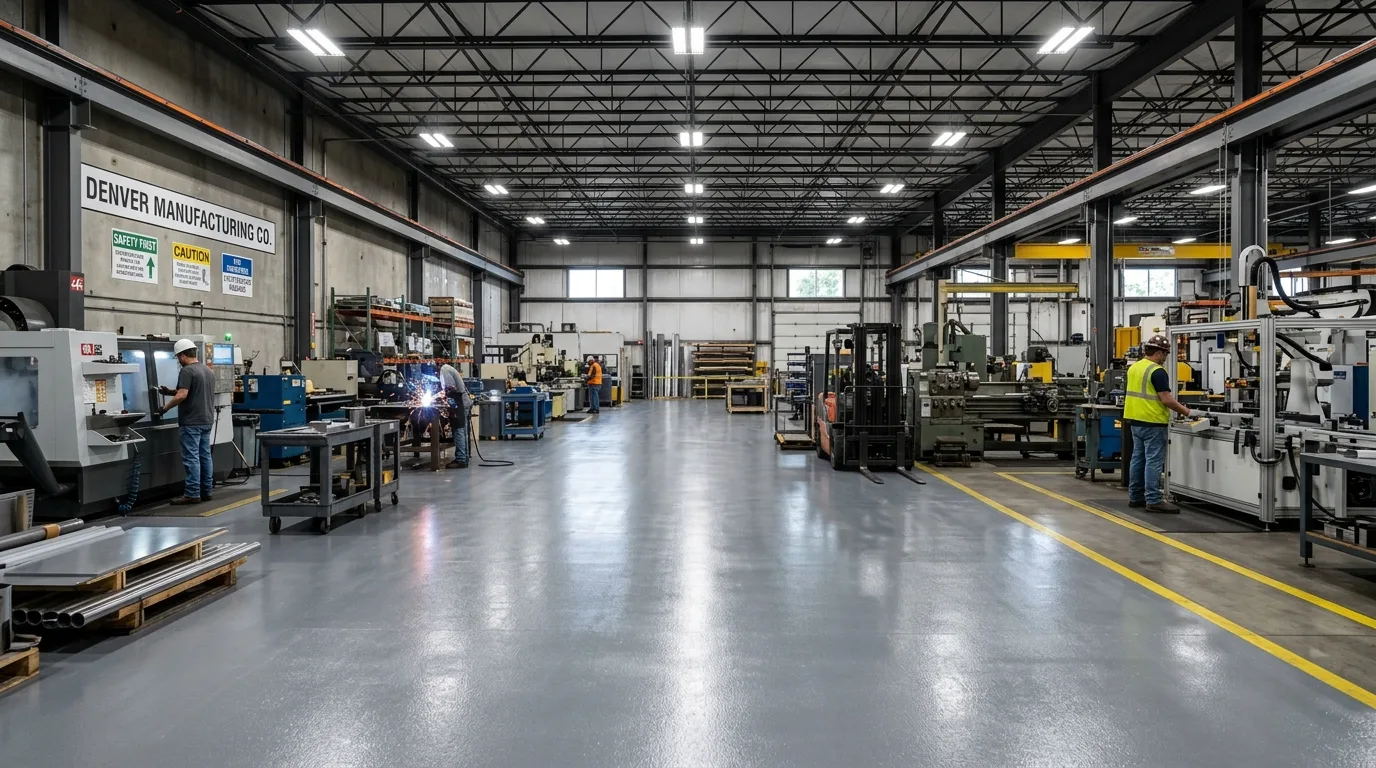
Denver industrial advantage: Polyurea's 1–2 hour walk-on cure means a 20,000 sqft industrial floor can return to full operation within a single shift. For Denver manufacturing and aerospace facilities that run continuous operations, this eliminates the multi-day shutdown that epoxy floor projects require.
Best Applications for Polyurea in Denver
Freeze-Thaw and Thermal Cycling Resistance
Denver's industrial facilities face the same freeze-thaw challenge as residential garages, amplified by larger floor areas and heavier loads. A 50,000 sqft manufacturing floor covering a concrete slab experiences significant thermal movement with each freeze-thaw cycle. Rigid coatings crack at expansion joints and high-stress areas; flexible coatings flex with the slab and maintain integrity.
Polyurea's elongation at break of 200–400% far exceeds what a concrete slab can move — even under Denver's extreme thermal cycling, the coating remains bonded. This is why polyurea is the specification of choice for outdoor exposed concrete, bridge decks, parking structures, and industrial floors in freeze-thaw environments. Denver's 155+ annual freeze-thaw cycles accelerate coating failure in rigid systems; polyurea shows no degradation from the same cycles over 15–20 year service lives.
Thermal shock resistance is equally important for Denver facilities: a heated manufacturing floor exposed to cold air from opening loading dock doors creates rapid temperature gradients. Polyurea tolerates this; brittle epoxy coatings can fracture under the thermal stress.
Denver Industries We Serve With Polyurea
Denver Aerospace & Aviation
Lockheed Martin Space, Boeing, and Raytheon facilities in the metro area require coatings that meet aerospace facility standards. Polyurea systems are specified for chemical compatibility with aviation fluids, resistance to solvent-based cleaners, and static-dissipative requirements in electronics assembly areas.
Front Range Oil & Gas Support
Denver serves as a hub for oil and gas operations in the DJ Basin (Weld County). Equipment yards, service facilities, and chemical storage areas along the Front Range require secondary containment coatings rated for crude oil, produced water, drilling chemicals, and de-icing compounds used through Colorado winters.
Municipal Water & Wastewater
Denver Water and Metro Wastewater Reclamation District facilities require corrosion-resistant coatings for concrete tanks, channels, and pump stations. Polyurea and polyurea-hybrid systems provide the chemical resistance to H₂S, chlorine, and biogenic acid that standard coatings cannot deliver.
Automotive & Fleet Maintenance
Denver's network of dealerships, fleet operators, and truck stops along I-70 and I-25 corridors. Polyurea installed in service bays and wash areas withstands daily vehicle traffic, oil accumulation, high-pressure hot water cleaning, and the thermal cycling from heated bays opening to winter outdoor temperatures.
Pricing for Polyurea Systems in Denver
| Application | System Type | Typical Range |
|---|---|---|
| Light commercial / service bay | Polyaspartic topcoat over epoxy base | $5–$8/sqft |
| Industrial floor (heavy traffic) | Spray polyurea, 40–60 mil thick-film | $7–$12/sqft |
| Secondary containment | 100% solids polyurea, seamless liner | $8–$14/sqft |
| Wastewater / chemical tank lining | High-build polyurea, specialty primers | $10–$18/sqft |
| ESD polyurea (electronics) | Static-dissipative polyurea system | $9–$15/sqft |
Industrial polyurea projects in Denver typically involve larger floor areas (5,000–100,000+ sqft) where mobilization costs are amortized across the scope. We provide fixed-price bids after an on-site assessment — pricing varies significantly based on existing coating condition, concrete profile requirements, and performance specifications.
Frequently Asked Questions
Yes — polyurea has superior freeze-thaw resistance and won't crack or delaminate through Colorado's temperature swings. Its high elongation at break (200–400%) allows it to flex with concrete movement through 155+ freeze-thaw cycles per year without failure. Standard epoxy coatings are significantly more brittle under the same thermal stress and typically require recoating within 4–6 years on Colorado industrial floors.
Walk-on in 1–2 hours at Denver's altitude. Light vehicle traffic is possible within 24 hours for most systems. The rapid cure is a core feature of polyurea chemistry — reaction times are measured in seconds to minutes rather than hours. Denver's lower atmospheric pressure slightly accelerates this already-fast cure compared to sea-level installations.
Aerospace (Lockheed Martin, Boeing Denver operations), manufacturing, automotive service departments and dealerships, secondary containment at oil and gas support facilities along the Front Range, and municipal water treatment and storage facilities. The combination of rapid return to service and freeze-thaw durability drives polyurea adoption in high-utilization industrial facilities throughout the Denver metro.
Compare options with our polyaspartic guide for garage and commercial applications, or see warehouse epoxy and commercial flooring service pages.