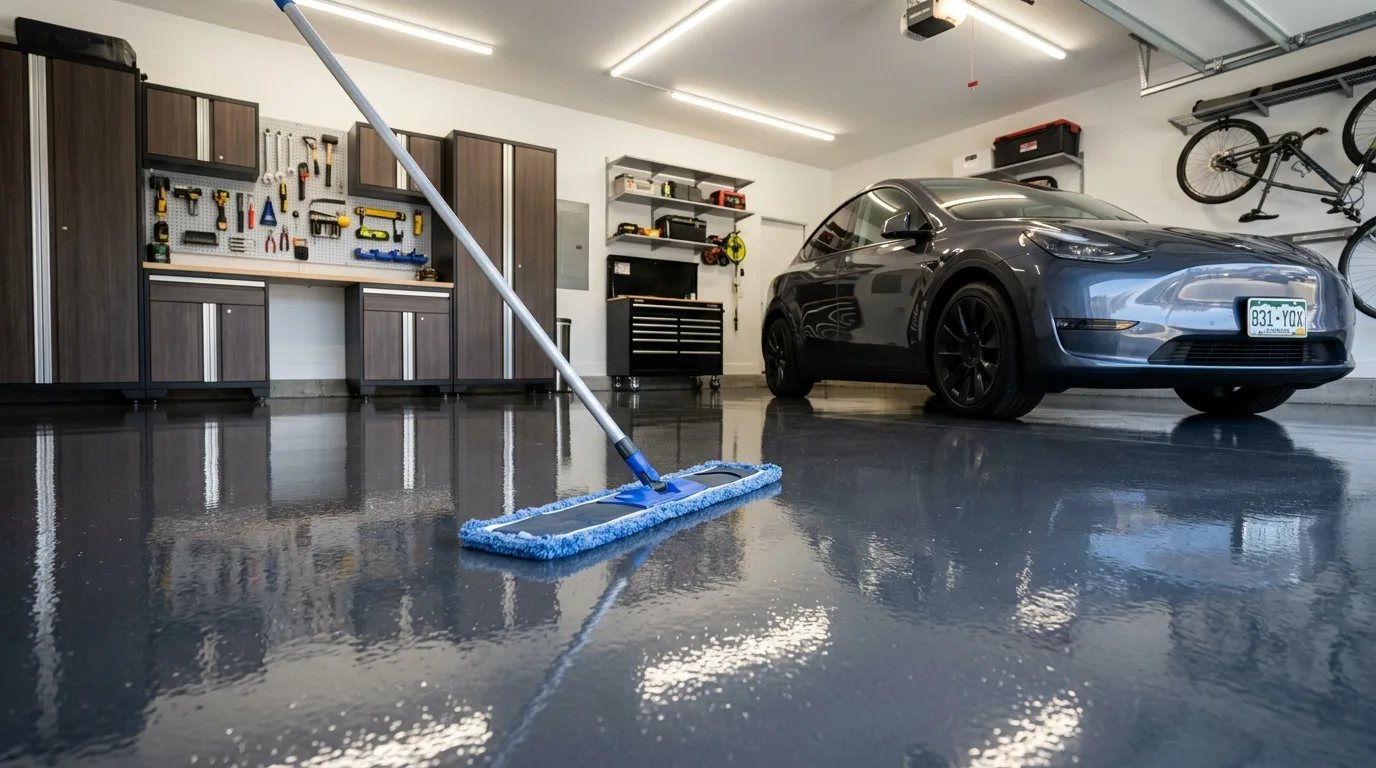
A properly installed epoxy floor is genuinely low-maintenance — but "low" isn't "zero," and Colorado's winter road salt, freeze-thaw cycling, and altitude UV all interact with a floor's finish over years of use. This guide covers exactly what keeps a Denver epoxy floor looking new for its full 15–20 year lifespan. See our Epoxy Floor Repair page if your floor needs more than routine maintenance.
Daily & Weekly Cleaning for Denver Epoxy Floors
Routine cleaning is straightforward and takes minutes, but consistency matters more than intensity — a floor swept weekly and mopped occasionally will outlast one deep-cleaned twice a year with everything in between neglected.
Weekly Sweep
Dust mop or sweep to remove grit that can scratch the topcoat surface under foot and tire traffic over time.
Weekly Damp Mop
pH-neutral cleaner diluted in warm water removes accumulated salt residue and general grime before it concentrates.
Immediate Salt Cleanup
Wipe up visible road salt and mag chloride residue as soon as practical rather than letting it sit and dry on the surface.
Periodic Inspection
Check seams, thresholds, and high-traffic areas every few months for early signs of wear that could benefit from spot attention.
Removing Road Salt and Mag Chloride From Epoxy
Colorado's magnesium chloride deicer is effective on roads but mildly corrosive to exposed surfaces over repeated contact — especially at coating edges, seams, and expansion joints where the topcoat's protective barrier is thinnest. Diluted pH-neutral cleaner and a microfiber mop remove it effectively; don't let salt residue sit and dry repeatedly through an entire winter without cleaning.
Cleaning Products Safe for Epoxy — and Ones That Damage It
| Product Type | Safe for Epoxy? | Notes |
|---|---|---|
| pH-neutral floor cleaner | Yes | Safe for regular use, won't dull the topcoat |
| Dish soap (diluted) | Yes | Mild option for occasional deeper cleaning |
| Vinegar or citrus-based cleaners | No | Acidic — will etch and dull polyaspartic topcoat over time |
| Ammonia-based cleaners | No | Can leave a hazy residue and degrade gloss |
| Abrasive scrub pads | No | Physically scratches the topcoat surface |
| Low-pressure hose rinse | Yes | Effective for general debris removal |
When to Recoat vs Repair Your Denver Epoxy Floor
Not every worn or damaged spot means the whole floor needs replacement. A dulled topcoat with an intact base coat is typically a recoat candidate — a straightforward refresh of the top protective layer. Chips, cracks, or delamination down to the concrete usually indicate a repair or, in more extensive cases, a full system replacement is needed.
- Dull or worn gloss, no chipping: Topcoat recoat — typically needed every 8–12 years depending on traffic and UV exposure.
- Localized chips or scratches: Spot repair — feathering in new coating at the damaged area.
- Widespread peeling or delamination: Full system evaluation — may indicate original prep or installation issues requiring complete redo.
- Cracks following slab movement: Concrete repair first, then coating — addressing the root cause before recoating.
Frequently Asked Questions
Diluted pH-neutral cleaner and a microfiber mop. Don't let salt sit — mag chloride is corrosive to epoxy edges over time, especially at seams and thresholds.
Low-pressure only (under 1,200 PSI). High pressure lifts polyaspartic topcoat at edges and seams, especially where the coating meets a wall, drain, or expansion joint.
Polyaspartic topcoat typically needs refreshing every 8–12 years depending on traffic, UV exposure, and road salt contact. High-traffic commercial floors may need it sooner than a light-use residential garage.