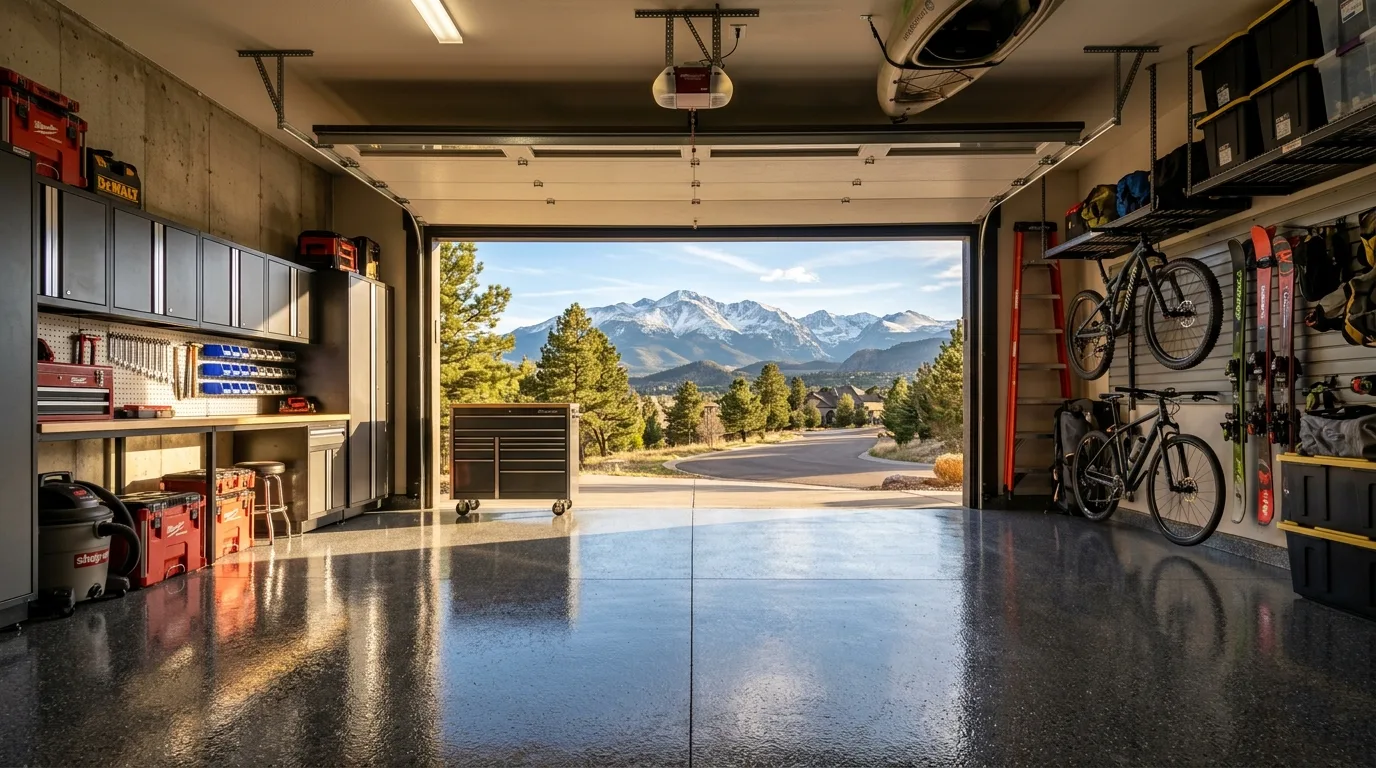
Denver sits a full mile above sea level, and that elevation changes more than the view — it changes how epoxy cures, how fast UV degrades a coating, and which systems actually hold up over years of Colorado sunshine and winter freeze-thaw. This is exactly how ProEpoxy accounts for altitude on every install, not marketing language. See our Polyaspartic Floor Coating and Garage Floor Epoxy pages for system specifics.
Why UV Is More Intense at 5,280 Feet
UV radiation intensity increases with elevation because there's less atmosphere to filter it — roughly a 4–5% increase per 1,000 feet of elevation gain. At Denver's 5,280 ft, that works out to approximately 25% more UV exposure than an identical location at sea level. For a garage floor that spends years exposed to sunlight through windows or an open door, that difference compounds significantly.
25% More UV
Denver's altitude means roughly a quarter more UV exposure than sea-level cities — a major factor in coating selection.
Resin Chemistry Matters
Aromatic epoxy resins are not UV-stable and will yellow. Aliphatic polyaspartic resins are engineered to resist this breakdown indefinitely.
Altitude-Adjusted Cure
Lower air pressure changes epoxy pot life and cure rate. We adjust mixing and application timing specifically for Denver's elevation.
Freeze-Thaw Compounding
UV degradation and freeze-thaw stress compound each other — a UV-weakened coating fails faster under repeated freeze-thaw cycling.
How Altitude Changes Epoxy Cure Times
Lower atmospheric pressure at altitude affects the chemical reaction rate of epoxy curing — pot life (the working time before the mixed epoxy becomes unworkable) can shift, and cure-to-cure timing between coats needs adjustment compared to sea-level application guidelines printed on generic product labels. Contractors unfamiliar with high-altitude application sometimes apply topcoats too early or too late relative to base coat cure, leading to adhesion issues that don't show up until months later.
We specify and calibrate cure windows specifically for Denver's elevation and typical seasonal humidity range — not generic manufacturer guidelines written for sea-level conditions.
Freeze-Thaw Cycling and What It Does to Floor Coatings
Denver experiences 150+ freeze-thaw cycles annually — moisture in and beneath the concrete slab repeatedly freezes and expands, then thaws and contracts. A properly cured, UV-stable, freeze-thaw-rated coating system tolerates this cycling for 15+ years. A coating compromised by UV degradation or improper cure becomes brittle and more susceptible to cracking or delaminating under this same stress.
This is why the two factors — UV stability and freeze-thaw resistance — aren't independent concerns. A coating that fails one is more likely to fail the other faster, since UV-weakened resin has reduced flexibility to absorb the microscopic stress of repeated freeze-thaw cycling.
Colorado-Rated Systems: What We Specify in Denver
- Epoxy base coat: 100% solids epoxy, altitude-calibrated cure timing, diamond-ground surface prep for maximum bond strength.
- Aliphatic polyaspartic topcoat: UV-stable, freeze-thaw rated, and resistant to deicing salt and magnesium chloride — standard on every install, not an upgrade.
- CSP-3 diamond grind prep: Opens concrete pores for proper mechanical bond, verified before any coating begins.
- Moisture vapor testing: Assessed on every project given Colorado's variable soil moisture conditions across the Front Range.
Frequently Asked Questions
Yes — lower air pressure at 5,280 ft changes cure rate. We adjust pot life and topcoat timing for Colorado conditions to ensure proper bonding and finish quality on every install.
Intense UV at altitude breaks down non-UV-stable epoxy resins. Aliphatic polyaspartic topcoat is required for Colorado garages that see any direct or indirect sunlight exposure.
Wrong coating selection — using non-UV-stable or non-freeze-thaw-rated products. Proper system selection prevents this entirely, which is why we specify polyaspartic topcoats as standard rather than optional.