Polyurea is the fastest-curing, most temperature-flexible coating in the floor systems ProEpoxy installs, and it fills a specific gap that neither epoxy nor polyaspartic covers as well: waterproofing membranes and extreme-condition industrial floors. This guide explains what actually makes polyurea chemically different, how its cure speed compares to the alternatives, and where it earns its higher cost on a polyurea floor coating project in Denver.
What Makes Polyurea Different From Epoxy and Polyaspartic
All three materials — epoxy, polyaspartic, and polyurea — are used in floor coating systems, but they're chemically distinct and suited to different jobs. Epoxy is a two-part resin known for adhesion and gap-filling body, but it's slow-curing and, in its standard form, not UV-stable. Polyaspartic is a fast-curing aliphatic polyurea variant optimized as a UV-stable topcoat. Pure polyurea takes the fast-cure characteristic further and adds exceptional flexibility and moisture tolerance — it can be applied over damp substrates and cures through a reaction largely unaffected by humidity or temperature, which neither epoxy nor standard polyaspartic can claim to the same degree.
That flexibility is polyurea's defining trait. Where epoxy is rigid and can crack under sustained movement or thermal cycling, polyurea remains elastic — it stretches and returns to shape rather than fracturing. That property is exactly what makes it the material of choice for waterproofing membranes and structures that flex or move under load, like parking decks and traffic-bearing surfaces.
Fast-Cure Chemistry Explained
Polyurea's cure speed comes from its reaction mechanism — it's a faster, more direct chemical reaction between its two components than epoxy's cure process, and it isn't slowed by ambient moisture the way some other coatings are. In practice, that means a polyurea coating can be tack-free within minutes of application and ready for foot or light vehicle traffic the same day, a fraction of the time epoxy or even polyaspartic requires for full cure.
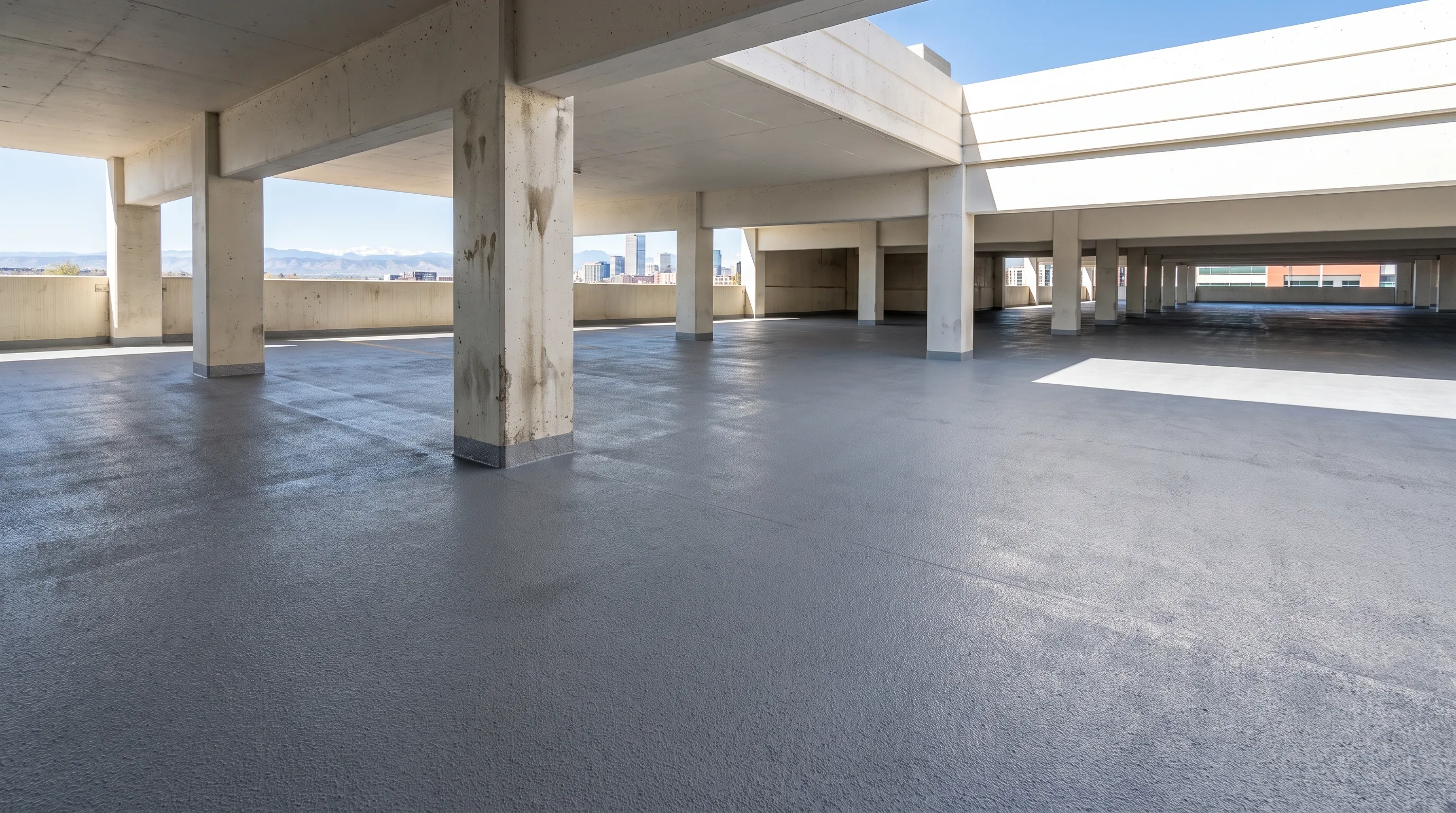
A seamless polyurea waterproofing membrane on a Denver parking structure — flexible enough to move with the deck under thermal cycling.
Temperature Flexibility for Colorado Extremes
Denver's seasonal swing — hot, high-UV summers and sharp winter freezes with 150+ annual freeze-thaw cycles — puts real thermal stress on any rigid coating. Polyurea's elasticity handles that stress differently than epoxy or even polyaspartic: instead of resisting the movement, it flexes with the substrate as concrete expands and contracts across the temperature range.
This matters most on structures that genuinely move — parking decks, elevated traffic surfaces, and anything with structural expansion joints. A rigid coating on a moving structure eventually cracks along the stress points; a properly installed polyurea membrane continues to flex with the structure without losing its seal. That elasticity also pays off in cold storage and freezer applications, where the coating cycles through extreme temperature swings every time a door opens — a rigid film would eventually fatigue and crack under that repeated thermal shock, while polyurea's flexibility absorbs it indefinitely.
Application temperature range: Polyurea can typically be applied across a wider ambient temperature window than epoxy, which is a practical advantage for scheduling installs during Denver's shoulder seasons when temperature swings between morning and afternoon are significant.
Best Applications in Denver
Polyurea's cost premium over epoxy and polyaspartic means it's specified where its specific properties are actually needed, not as a default choice.
| Application | Why Polyurea | Cost / Sq Ft |
|---|---|---|
| Parking Structures & Traffic DecksWaterproofing membrane | Flexes with structural movement, seals against water intrusion | $8 – $14 |
| Industrial & Manufacturing FloorsChemical/abrasion resistance | Fast turnaround minimizes production downtime | $7 – $12 |
| Cold Storage & Freezer FloorsTemperature extremes | Stays flexible across a wide temperature range without cracking | $9 – $15 |
| Standard Garage/ResidentialNot typically needed | Polyaspartic-topped epoxy is more cost-effective | N/A |
For a typical residential garage or standard commercial floor, an epoxy base with a polyaspartic topcoat delivers the durability and UV stability needed at a lower cost — polyurea's premium is worth paying specifically where waterproofing, structural flexibility, or extreme fast-cure turnaround are actual project requirements, not just nice-to-haves.
What a Polyurea Installation Actually Requires
Polyurea's speed is a double-edged consideration for installers — the same fast reaction that makes it valuable on a job site also makes it far less forgiving of application mistakes than epoxy or even polyaspartic. A few things separate a properly installed polyurea system from one that underperforms its potential.
- Specialized spray equipment. True polyurea (as opposed to hybrid polyurea-epoxy blends) typically requires plural-component spray rigs that mix and apply the material in a very short working window — this isn't a roll-on product for most true-polyurea formulations, and the equipment and experience requirement is part of why it costs more.
- Substrate prep still matters. Polyurea's tolerance for damp substrates doesn't eliminate the need for proper diamond grinding and surface profiling — it just makes the material more forgiving of conditions that would compromise epoxy adhesion.
- Correct hybrid vs. pure system selection. Pure polyurea and polyurea-epoxy hybrids have different cure speeds, costs, and application methods. Specifying the wrong one for the job — pure polyurea where a hybrid would suffice, or vice versa — either overspends the budget or underdelivers on performance.
- Joint and detail work on traffic decks. Waterproofing membrane applications live or die on how well the coating is detailed around expansion joints, drains, and penetrations — this detail work is where most membrane failures actually originate, not in the field areas.
Because of the specialized equipment and narrower margin for error, polyurea installation is a place where contractor experience specifically with polyurea — not just general floor coating experience — makes a measurable difference in the finished result.
Polyurea vs Polyaspartic: Which One Do You Actually Need
Most Denver property owners researching polyurea are really trying to figure out whether they need it at all, versus the more common polyaspartic-topped epoxy system. The distinction comes down to whether the floor needs to move or needs to be waterproof.
If the floor is a static slab-on-grade — a residential garage, a retail floor, a standard warehouse — polyaspartic-topped epoxy delivers the UV stability and durability needed at a lower cost, and there's no real functional reason to pay polyurea's premium. If the structure genuinely flexes under load or thermal cycling — an elevated parking deck, a traffic-bearing structure over occupied space below, anything requiring an actual waterproofing membrane — polyurea's elasticity isn't a luxury upgrade, it's the only material class that reliably solves the problem. Getting this distinction right up front saves either an unnecessary premium or an underspecified floor that fails to do the one job it was actually needed for.