Line striping gets treated as a cosmetic add-on more often than it should — in reality, it's a safety-critical layer of a warehouse floor system with its own durability requirements, color standards, and installation methods. Poorly executed striping that wears away within months isn't just an eyesore, it's a compliance gap. This guide covers how striping fits into a complete warehouse epoxy flooring system, the OSHA color standards that apply, and how to add durable striping to a floor that doesn't already have it.
Why Line Striping Is Part of a Complete Floor System
Striping does real operational work in a warehouse — it defines forklift travel lanes, marks pedestrian walkways, flags hazard zones around equipment and racking, and delineates staging areas so material flow stays organized. In a facility with any meaningful forklift traffic, clear striping is a genuine safety control, not decoration, since it's often the primary visual cue that keeps foot traffic and forklift lanes separated.
Treating striping as a system component rather than an afterthought also affects how it's installed. Striping applied directly onto bare or already-coated concrete without integration into the floor system wears at a different rate than the surrounding floor, which means it needs its own maintenance schedule separate from the rest of the floor. Striping specified and installed as part of the coating system — embedded under or within the topcoat — wears at the same rate as everything around it.
OSHA Color Standards for Warehouse Markings
OSHA doesn't mandate a single universal striping color scheme by regulation, but ANSI Z535 and widely adopted industry convention establish color meanings that most facilities, insurers, and auditors expect to see followed.
Beyond color, line width and placement conventions matter for both safety and any OSHA walkthrough or insurance inspection — aisle lines are typically specified at a minimum width (commonly 2-4 inches depending on facility standard) and positioned with enough clearance from racking to account for load overhang.
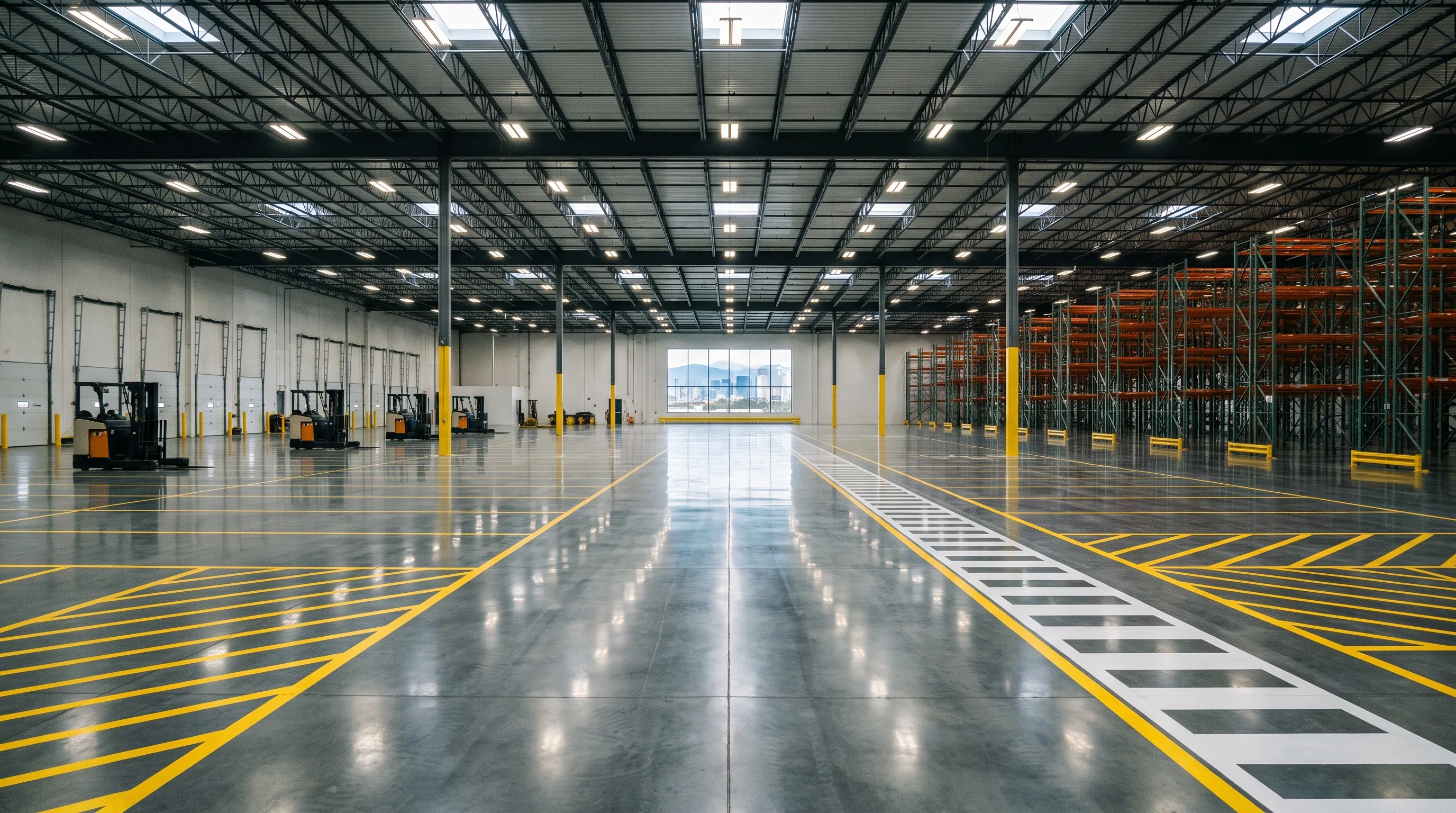
OSHA-standard yellow and white striping embedded into a Denver warehouse floor system — durable under sustained forklift traffic.
Durability of Striping Under Forklift Traffic
This is where striping method matters most. Surface-applied tape or paint sits on top of the floor's topcoat, which means it wears under the same forklift traffic that wears the floor itself — but because it's a thinner, separate layer, it typically wears faster and needs more frequent touch-up, especially in high-traffic turning zones and aisle centerlines where wheel contact concentrates.
Embedded striping — installed as part of the coating sequence and sealed under the polyaspartic topcoat — performs completely differently. Because it's protected by the same UV-stable, abrasion-resistant topcoat as the rest of the floor, it wears at the same rate as the surrounding coating rather than as a separate, faster-degrading layer. For a facility investing in a forklift-rated floor system already, embedded striping is the option that actually matches that investment's durability profile instead of undercutting it with a shorter-lived surface layer. The cost difference between the two methods is modest relative to the total floor system cost, which is part of why embedded striping is increasingly the default recommendation for any new install rather than a premium add-on.
Denver-specific note: Any warehouse zone near dock doors sees the same freeze-thaw and mag chloride exposure that affects the rest of the floor — surface-applied striping in those zones specifically tends to degrade faster than embedded striping, which shares the topcoat's chemical and freeze-thaw resistance.
Adding Striping to an Existing Epoxy Floor
Facilities with an existing epoxy floor that either has no striping or has worn surface-applied striping have two realistic paths, depending on timeline and budget.
- Tape-and-paint retrofit. The faster, lower-cost option — high-quality striping tape or industrial floor paint applied directly to the existing coating. Faster to install, but wears at a different rate than embedded striping and needs periodic touch-up.
- Embedded striping during a recoat. If the floor is due for a topcoat recoat anyway, striping can be embedded into that new topcoat layer — matching the durability of a fresh floor system rather than sitting on top of an aging one.
For a facility not yet due for a recoat, tape-and-paint is a reasonable interim solution. For one planning a recoat in the near term, embedding the striping into that recoat is worth the minor additional coordination for the durability gain.
Beyond Basic Lines: Additional Warehouse Floor Markings
Line striping is often the entry point into a broader category of floor markings that make a warehouse safer and easier to operate, and it's worth planning the full marking scheme at once rather than adding pieces one at a time.
- Floor signage and stenciling. Directional arrows, zone labels, and department markings embedded the same way as striping — durable, legible, and consistent with the rest of the floor's finish.
- 5S and Kanban markings. Shadow boards, staging area outlines, and inventory location markers support lean warehouse operations and are increasingly requested alongside standard safety striping.
- Reflective or high-visibility striping. For warehouses with lower ambient lighting in certain zones, reflective striping additives improve visibility without adding fixtures.
- Load capacity and rack labeling. Floor-level markings near racking that indicate maximum load or clearance requirements, often specified alongside the rack system itself.
Planning these elements together during a floor install or recoat means the whole marking system goes down as a coordinated layer rather than a patchwork of additions made at different times with different materials and different wear characteristics.
Planning Your Striping Layout
Before any tape gets laid or paint gets applied, an effective striping plan starts with a walkthrough that maps actual traffic patterns — not a generic template applied to the floor plan. Forklift travel routes, racking aisle widths, pedestrian crossing points, and equipment hazard zones all inform where lines go and how wide they need to be.
This mapping exercise often surfaces workflow issues independent of the striping itself — a racking aisle that's narrower than ideal for the equipment using it, or a pedestrian path that crosses forklift lanes more often than necessary. Addressing those layout issues before striping locks in the plan is far easier than repainting lines after operations have already settled into a pattern around the original layout.